Why Every Business Needs an E-commerce Website in 2026
Introduction
The way customers buy products and services has changed dramatically over the last decade. Today, people search online before making purchasing decisions, compare prices instantly, and expect businesses to be available 24/7.
For this reason, having only a physical store or a Facebook page is no longer enough. Businesses that want to grow, attract more customers, and remain competitive need a professional e-commerce website.
In 2026, an e-commerce website is not just a sales channel—it is the digital foundation of a successful business.
What is an E-commerce Website?
An e-commerce website is an online platform where businesses can showcase products or services, receive orders, process payments, and communicate with customers.
Unlike social media platforms, a business owns and controls its e-commerce website completely.
Typical features include:
- Product Catalog
- Shopping Cart
- Online Payments
- Order Tracking
- Customer Accounts
- Inventory Management
- Promotional Campaigns
The Digital Shift in Consumer Behavior
Modern consumers prefer convenience.
Before visiting a store, many customers:
- Search products online
- Compare alternatives
- Read reviews
- Check pricing
- Look for delivery options
Businesses without an online presence lose potential customers to competitors that provide these conveniences.
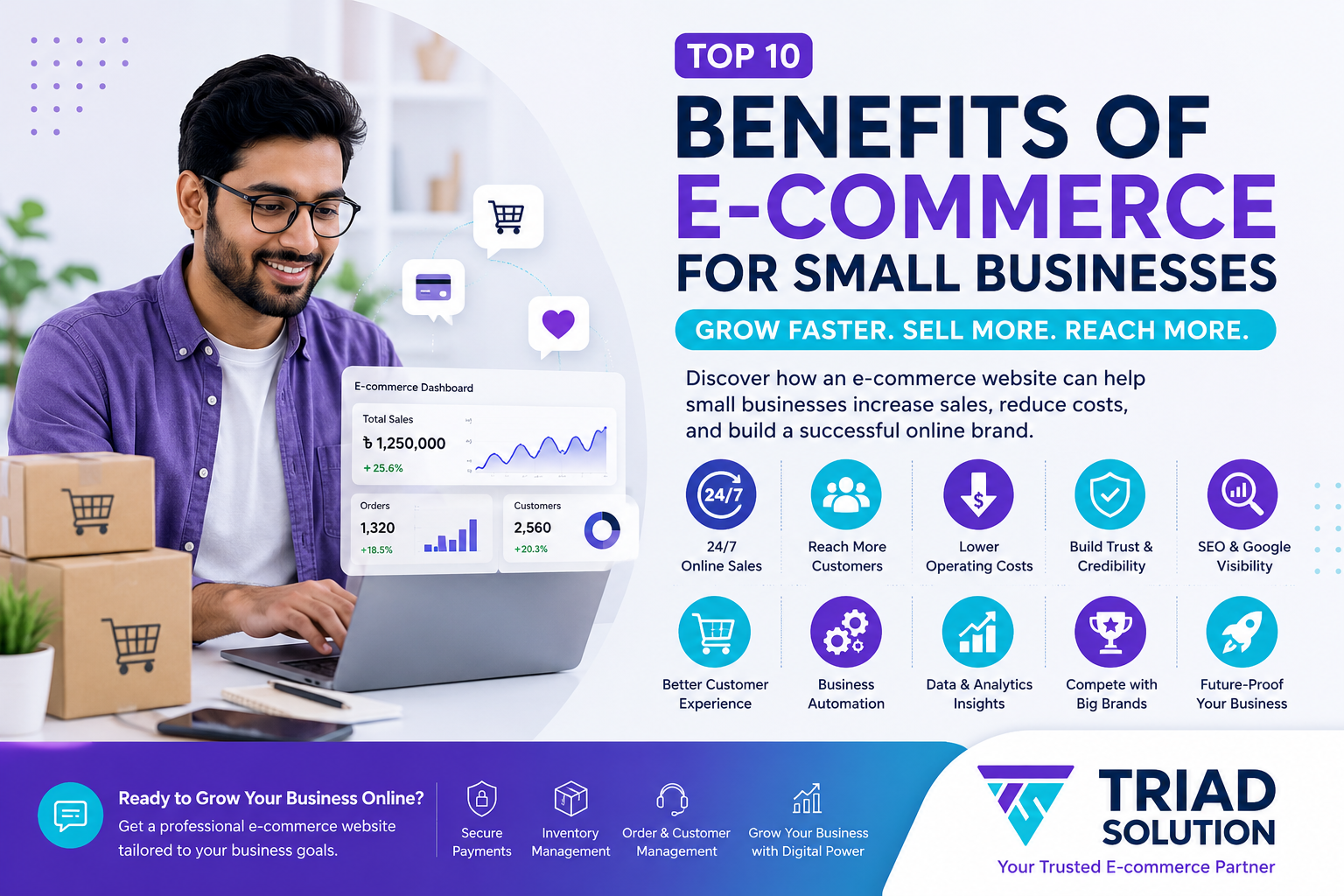
Top Reasons Every Business Needs an E-commerce Website
1. Your Business Stays Open 24/7
A physical store has operating hours.
An e-commerce website never closes.
Customers can browse products, place orders, and make payments anytime from anywhere.
Benefits include:
- More sales opportunities
- Better customer convenience
- Increased revenue potential
2. Reach Customers Beyond Your Local Area
Traditional businesses are limited by geography.
An e-commerce website allows businesses to reach customers across cities, regions, and even international markets.
This expands market opportunities without requiring additional physical locations.
3. Build Trust and Professional Credibility
Customers often judge businesses based on their online presence.
A professional website creates trust by providing:
- Business information
- Product details
- Customer reviews
- Contact information
- Secure payment options
A website makes a business appear more established and reliable.
4. Increase Sales and Revenue
An e-commerce website creates multiple revenue opportunities.
Businesses can:
- Sell products online
- Offer special promotions
- Upsell related products
- Cross-sell complementary products
These strategies help increase average order value and overall revenue.
5. Full Control Over Your Business
Many businesses rely entirely on social media platforms.
However, platforms can change policies, reduce organic reach, or restrict accounts unexpectedly.
With an e-commerce website, businesses maintain complete control over:
- Customer data
- Marketing campaigns
- Product information
- Branding
This creates long-term business stability.
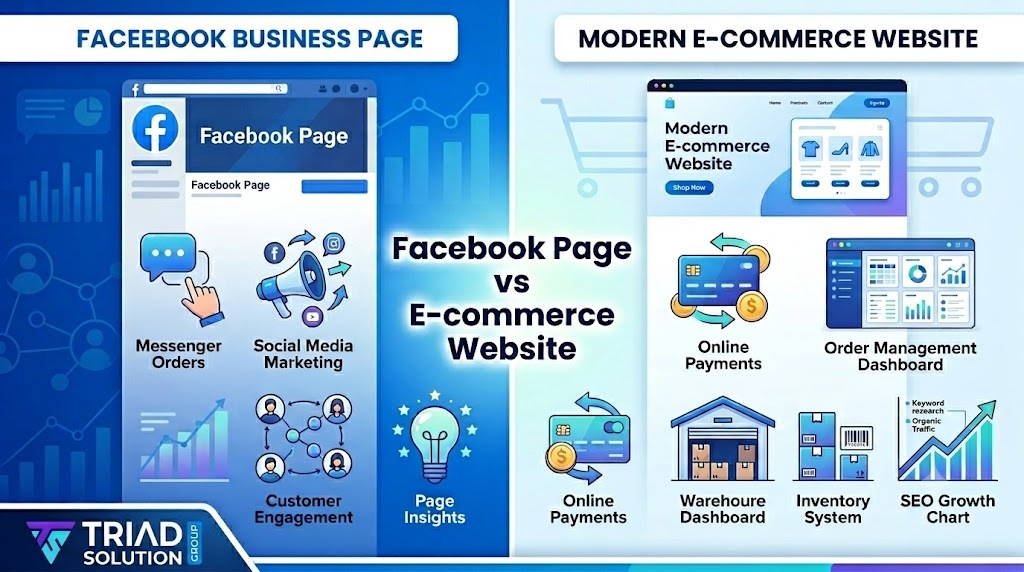
E-commerce Website vs Facebook Business Page
Facebook Business Page
Advantages:
- Easy to start
- Low initial cost
- Large audience
Limitations:
- Limited control
- Algorithm dependency
- Less professional image
- Restricted customization
E-commerce Website
Advantages:
- Full ownership
- Professional branding
- Better SEO visibility
- Advanced automation
- Improved customer experience
The most successful businesses use both together.
SEO Benefits of an E-commerce Website
Search Engine Optimization (SEO) helps businesses attract customers from search engines.
When customers search for products or services, a properly optimized website can appear in search results.
Benefits include:
- Free organic traffic
- Higher visibility
- Better lead generation
- Long-term growth
Unlike paid advertising, SEO continues generating traffic over time.
Better Customer Experience
Modern customers expect:
- Fast loading websites
- Easy navigation
- Secure payments
- Mobile-friendly design
- Quick checkout process
An e-commerce website delivers these experiences efficiently.
Satisfied customers are more likely to make repeat purchases and recommend the business to others.
Data and Business Insights
An e-commerce website provides valuable data.
Businesses can analyze:
- Visitor behavior
- Popular products
- Sales performance
- Customer demographics
- Conversion rates
These insights help businesses make smarter decisions and improve performance.
E-commerce Automation Opportunities
A modern website can integrate with automation tools.
Examples include:
- Automated order processing
- Inventory synchronization
- CRM integration
- Marketing automation
- AI chatbots
- Customer support systems
Automation improves efficiency while reducing operational costs.
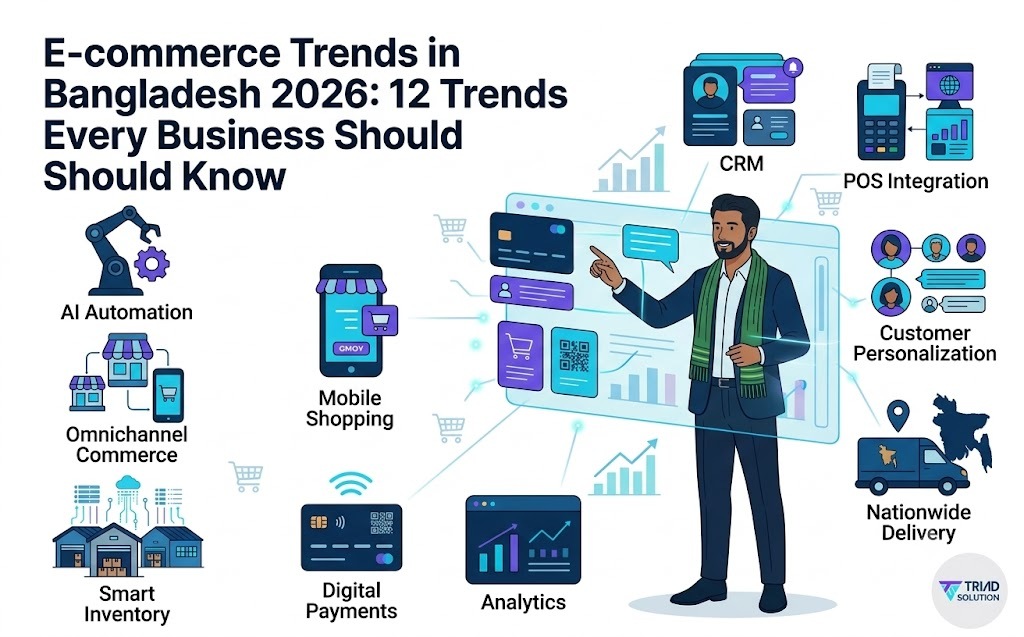
Why Businesses in Bangladesh Need E-commerce Websites
Bangladesh is experiencing rapid digital growth.
Consumers are increasingly using:
- Smartphones
- Mobile banking
- Digital payments
- Online shopping platforms
Businesses that establish a strong online presence today will be better positioned for future growth.
Future-Proofing Your Business
Technology continues to evolve.
Businesses that invest in digital infrastructure now can adapt more easily to future trends, including:
- AI-driven commerce
- Personalized shopping experiences
- Omnichannel retail
- Voice commerce
- Smart automation
An e-commerce website serves as the foundation for these innovations.
Conclusion
In 2026, an e-commerce website is no longer optional. It is an essential business asset.
A professional website helps businesses reach more customers, increase sales, build trust, automate operations, and remain competitive in a rapidly evolving digital marketplace.
Whether you run a retail store, restaurant, service business, or startup, investing in an e-commerce website can create significant long-term value and growth opportunities.
FAQ Section
Why does a small business need an e-commerce website?
An e-commerce website helps small businesses reach more customers, increase sales, and operate more efficiently.
Is Facebook enough for selling products online?
Facebook is useful, but businesses should also have a website to gain full control and build long-term credibility.
Can an e-commerce website increase sales?
Yes. It allows businesses to sell 24/7, attract online visitors, and improve customer experience.
What features should a modern e-commerce website have?
Online payments, inventory management, order tracking, mobile responsiveness, SEO optimization, and automation tools.