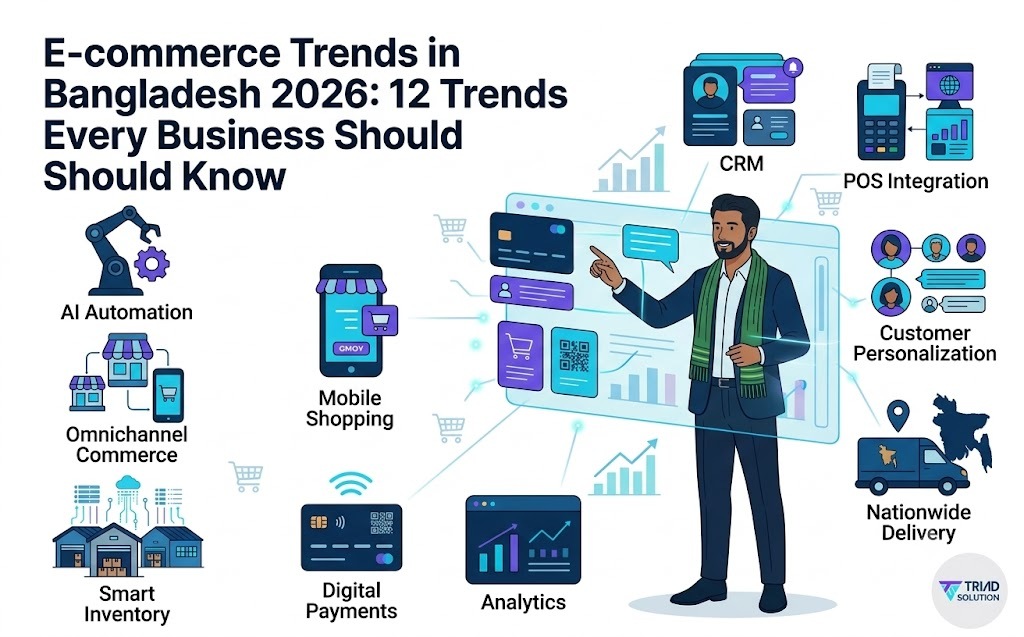
E-commerce Trends in Bangladesh 2026: 12 Trends Every Business Should Know
Introduction
Bangladesh's e-commerce industry is evolving at an incredible pace. Over the last few years, increased internet penetration, smartphone adoption, digital payment solutions, and improved logistics have transformed how people shop online.
Today's customers expect fast delivery, secure payments, personalized recommendations, and seamless shopping experiences across multiple channels.
For business owners, understanding these trends is no longer optional—it is essential for staying competitive.
Whether you run a fashion store, bakery, pharmacy, electronics business, restaurant, or any other retail operation, keeping up with emerging e-commerce trends can help you attract more customers, improve operational efficiency, and increase revenue.
In this guide, we'll explore the most important e-commerce trends that are shaping Bangladesh in 2026.
Mobile Commerce (M-Commerce) Continues to Grow
More than ever before, customers are shopping directly from their smartphones.
From browsing products to making payments, mobile devices have become the primary shopping tool for millions of consumers.
Businesses should ensure that their websites offer:
- Responsive design
- Fast loading speed
- Mobile-friendly checkout
- Easy product navigation
- One-click purchasing
A slow or poorly optimized mobile website can lead to lost sales and frustrated customers.
AI is Transforming Online Shopping
Artificial Intelligence is changing the way businesses interact with customers.
AI-powered technologies now help businesses:
- Recommend products
- Answer customer questions instantly
- Predict buying behavior
- Personalize shopping experiences
- Improve customer retention
Instead of offering the same experience to every visitor, AI enables businesses to provide personalized recommendations based on customer interests and shopping history.
Businesses that embrace AI can improve both customer satisfaction and sales performance.
E-commerce Automation Becomes Essential
Manual business operations are becoming increasingly difficult as order volumes grow.
Modern businesses are adopting automation for:
- Order management
- Inventory updates
- Invoice generation
- Customer notifications
- Marketing campaigns
- CRM synchronization
Automation reduces errors, saves time, and allows business owners to focus on growth instead of repetitive tasks.
For small and medium-sized businesses, automation is no longer a luxury—it is becoming a competitive necessity.
Social Commerce Keeps Expanding
Social media platforms are no longer just marketing channels.
Customers now discover products, interact with brands, and make purchasing decisions directly through platforms like Facebook, Instagram, and TikTok.
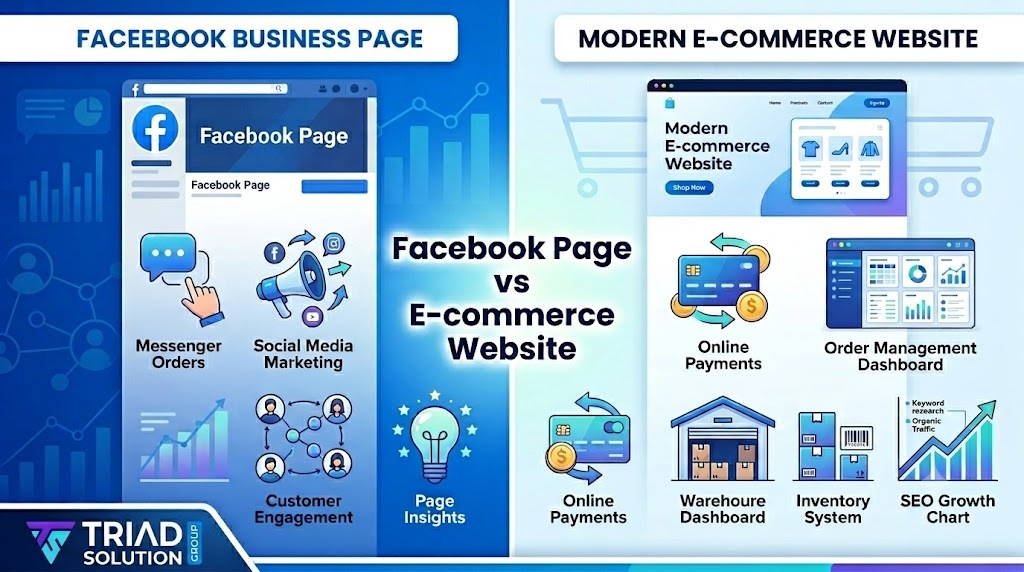
However, successful businesses are not relying solely on social media.
Instead, they use social platforms to attract customers while directing them to a professional e-commerce website where orders, payments, and customer data can be managed efficiently.
This approach provides greater business control and long-term sustainability.
Omnichannel Commerce is Becoming the New Standard
Today's customers don't shop through just one channel. They may discover a product on Facebook, compare prices on Google, visit your website, ask questions on WhatsApp, and finally complete the purchase through your mobile app.
This seamless experience is known as Omnichannel Commerce.
Instead of managing each sales channel separately, businesses are integrating them into one connected ecosystem.
An omnichannel strategy allows you to:
- Manage orders from one dashboard
- Synchronize inventory across all channels
- Provide a consistent customer experience
- Track customer interactions from multiple platforms
- Reduce manual work and errors
For growing businesses, omnichannel commerce is no longer a luxury—it is becoming an essential business strategy.
Smart Inventory Management
Inventory management is one of the biggest challenges for online businesses.
Manual stock tracking often results in:
- Overselling
- Stock shortages
- Delayed deliveries
- Customer dissatisfaction
Modern inventory systems automatically:
- Update stock after every order
- Generate low-stock alerts
- Sync inventory across warehouses
- Prevent overselling
Businesses with accurate inventory data make better purchasing decisions and provide a better customer experience.
Digital Payments Continue to Grow
Customers expect fast, secure, and flexible payment options.
Businesses that offer multiple payment methods often experience higher conversion rates.
Modern payment options include:
- Mobile Financial Services
- Debit & Credit Cards
- Internet Banking
- QR Payments
- Cash on Delivery (COD)
A smooth payment experience builds customer trust and reduces abandoned carts.
Personalized Shopping Experiences
Customers no longer expect a "one-size-fits-all" shopping experience.
Modern e-commerce platforms use customer behavior and purchase history to provide personalized experiences.
Examples include:
- Recommended products
- Personalized offers
- Customized email campaigns
- Dynamic homepage content
- Personalized discounts
Personalization increases customer engagement, loyalty, and average order value.
Live Shopping and Video Commerce
Video content has become one of the most influential sales channels.
Businesses now use:
- Live product demonstrations
- Live Q&A sessions
- Product launch events
- Influencer collaborations
Live shopping allows customers to interact with brands in real time, ask questions, and purchase products instantly.
This trend is becoming increasingly popular among fashion, beauty, electronics, and lifestyle brands.
AI-Powered Customer Support
Customer expectations continue to rise.
People expect quick responses at any time of the day.
AI-powered chatbots help businesses:
- Answer frequently asked questions
- Track customer orders
- Recommend products
- Collect customer information
- Provide instant support 24/7
Instead of replacing human support, AI allows support teams to focus on more complex customer issues while routine questions are handled automatically.
Data-Driven Decision Making
Modern businesses rely on analytics instead of assumptions.
Every customer interaction provides valuable insights.
Businesses should monitor:
- Website traffic
- Product performance
- Conversion rates
- Customer lifetime value
- Marketing ROI
- Cart abandonment
- Repeat purchase rate
Using data effectively enables businesses to improve marketing campaigns, optimize inventory, and increase profitability.
Sustainable and Responsible E-commerce
Consumers are becoming more conscious of environmental and social responsibility.
Businesses are responding by adopting practices such as:
- Eco-friendly packaging
- Digital invoices
- Efficient delivery planning
- Reduced packaging waste
- Sustainable sourcing
While sustainability may not be the primary purchasing factor for every customer today, it is becoming increasingly important for long-term brand reputation.
Why These Trends Matter for Businesses in Bangladesh
Bangladesh's digital economy is evolving rapidly.
Businesses that embrace these trends can:
- Improve operational efficiency
- Increase customer satisfaction
- Reduce operational costs
- Expand into new markets
- Build stronger customer relationships
- Stay ahead of competitors
Waiting too long to adopt new technologies may result in losing customers to more innovative competitors.
How Triad Solution Helps Businesses Prepare for the Future
At Triad Solution, we believe the future of commerce is connected, automated, and data-driven.
Our digital commerce solutions are designed to help businesses adapt to emerging trends through:
- Professional E-commerce Website Development
- Business Automation
- AI Chatbot Integration
- Inventory Management
- POS Integration
- CRM Integration
- Multi-Branch Management
- Digital Marketing Support
- Scalable Commerce Solutions
Whether you're launching a new business or modernizing an existing one, adopting the right technology today will prepare your business for tomorrow's opportunities.
Frequently Asked Questions (FAQ)
1. What is the biggest e-commerce trend in Bangladesh in 2026?
The biggest trends include AI-powered automation, mobile commerce, omnichannel retail, personalized shopping experiences, digital payments, and data-driven business management.
2. Why should businesses follow e-commerce trends?
Technology and customer behavior change rapidly. Businesses that adopt new trends early can improve customer experience, increase sales, and stay ahead of competitors.
3. Is AI replacing people in e-commerce?
No. AI supports businesses by automating repetitive tasks such as customer support, product recommendations, and order management. Human expertise is still essential for strategy, decision-making, and customer relationships.
4. What is Omnichannel Commerce?
Omnichannel Commerce connects all sales channels—such as your website, Facebook, Instagram, physical store, and POS system—into one unified platform, giving customers a seamless shopping experience.
5. Why is mobile commerce important?
Most online shoppers now browse and purchase using smartphones. A mobile-friendly website improves user experience, increases conversions, and supports higher search engine rankings.
6. How does automation help e-commerce businesses?
Automation reduces manual work by handling tasks like:
- Order processing
- Inventory updates
- Customer notifications
- Invoice generation
- Marketing campaigns
- Delivery tracking
This improves efficiency and reduces operational errors.
7. How can small businesses prepare for future e-commerce trends?
Small businesses should invest in:
- A professional e-commerce website
- SEO
- AI-powered tools
- Business automation
- Customer relationship management (CRM)
- Analytics and reporting
These investments create a scalable foundation for long-term growth.