Facebook Page vs E-commerce Website: Which is Better for Your Business in 2026
Introduction
When starting an online business, one of the most common questions entrepreneurs ask is:
"Should I sell through a Facebook Page or build an E-commerce Website?"
Many businesses in Bangladesh start with Facebook because it is easy, affordable, and provides quick access to potential customers. However, as businesses grow, managing orders, inventory, customer information, and marketing through Facebook alone becomes challenging.
The truth is that both Facebook Pages and E-commerce Websites have important roles in a successful online business strategy. Understanding their strengths and limitations can help you make the right decision.
Understanding Facebook Business Pages
A Facebook Business Page allows businesses to showcase products, communicate with customers, and promote offers through social media.
Businesses can:
- Post products
- Receive customer messages
- Run advertisements
- Build communities
- Generate engagement
Because Facebook already has millions of active users, businesses can start marketing immediately.
Advantages of Using a Facebook Page
Easy to Start
Creating a Facebook Page is free and requires minimal technical knowledge.
Access to a Large Audience
Facebook gives businesses access to a massive user base where customers spend significant time every day.
Direct Customer Communication
Businesses can instantly communicate through:
- Messenger
- Comments
- Live Chat
- Posts
Advertising Opportunities
Facebook Ads allow businesses to target specific audiences based on demographics, interests, and behaviors.
Limitations of Facebook Pages
Limited Business Control
Your business depends entirely on Facebook’s rules and algorithms.
Changes in policies or account restrictions can impact your business.
Manual Order Management
Many Facebook businesses manually handle:
- Orders
- Customer information
- Payments
- Inventory updates
This often creates inefficiencies.
Limited Branding
Facebook Pages offer limited customization compared to a professional website.
No Full Ownership of Customer Data
Businesses do not fully control customer information collected through Facebook.
Understanding E-commerce Websites
An E-commerce Website is a dedicated online platform where businesses can sell products directly to customers.
Features typically include:
- Product Catalog
- Shopping Cart
- Checkout System
- Payment Gateway
- Order Management
- Inventory Tracking
- Customer Accounts
Unlike Facebook, the business owns and controls the platform.
Advantages of an E-commerce Website
Professional Brand Image
A website increases credibility and trust.
Customers often perceive businesses with websites as more professional and reliable.
Full Business Ownership
You control:
- Customer Data
- Products
- Pricing
- Marketing
- Branding
No third-party platform can suddenly limit your operations.
Automated Operations
Modern websites support:
- Order Automation
- Inventory Management
- CRM Integration
- Marketing Automation
- AI Chatbots
This improves efficiency significantly.
Better Customer Experience
Customers can:
- Browse products easily
- Search products instantly
- Pay securely
- Track orders
The buying process becomes smoother and more professional.
SEO Benefits
One of the biggest advantages of a website is Google visibility.
Customers searching for products on Google can discover your business organically.
Facebook posts rarely provide the same long-term search visibility.
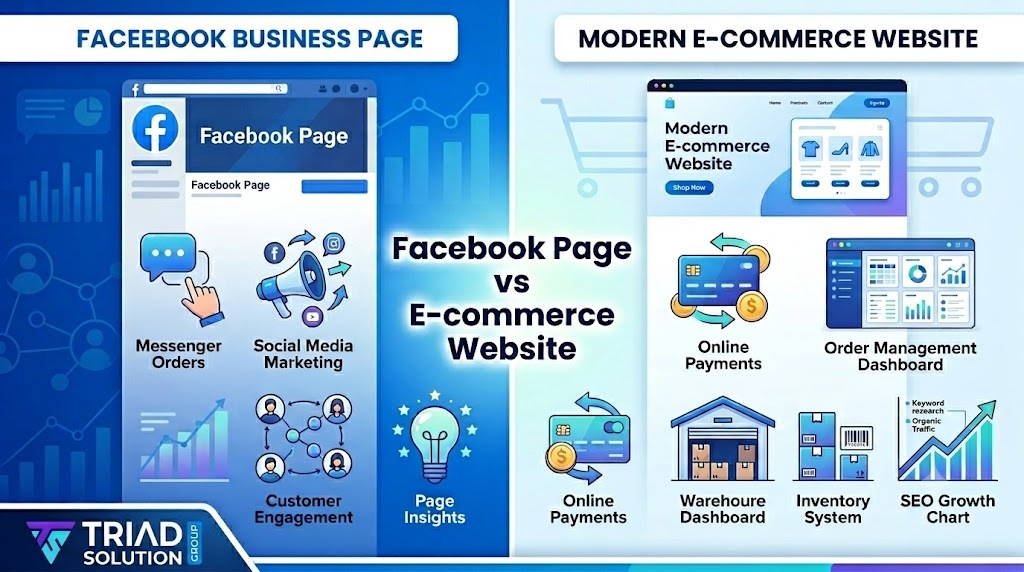
Facebook Page vs E-commerce Website Comparison
| Feature | Facebook Page | E-commerce Website |
|---|---|---|
| Startup Cost | Low | Moderate |
| Professional Branding | Limited | Excellent |
| Customer Ownership | Limited | Full |
| SEO Benefits | Very Low | High |
| Automation | Limited | Advanced |
| Scalability | Moderate | High |
| Business Control | Limited | Full |
| Long-Term Growth | Moderate | Excellent |
Which Platform Generates More Sales?
For new businesses, Facebook often generates faster initial sales because customers are already active on the platform.
However, for sustainable growth, websites usually outperform social media because they provide:
- Better customer experience
- Better SEO
- Better automation
- Better scalability
The most successful businesses combine both channels.
The Best Strategy: Use Both Together
Rather than choosing one over the other, smart businesses integrate Facebook with their website.
Facebook Helps You
- Reach new audiences
- Build engagement
- Run advertisements
- Generate leads
Website Helps You
- Convert visitors into customers
- Manage orders efficiently
- Automate operations
- Build long-term brand value
This combination creates a powerful digital ecosystem.
Why Businesses in Bangladesh Should Invest in Websites
Many Bangladeshi businesses still rely exclusively on Facebook.
This creates risks:
- Account restrictions
- Policy changes
- Limited scalability
- Manual operations
Businesses that invest in websites gain a competitive advantage and position themselves for future growth.
The Future of Online Business
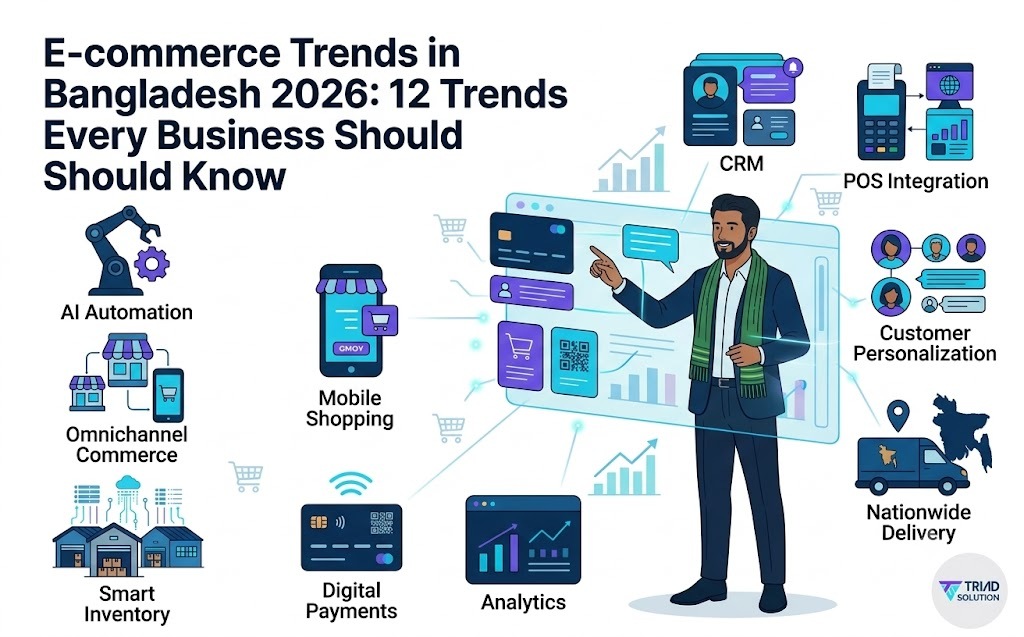
The future of e-commerce will increasingly depend on:
- AI Automation
- Omnichannel Commerce
- Personalized Shopping
- Customer Data Analytics
- Automated Marketing
A website serves as the foundation for implementing these technologies.